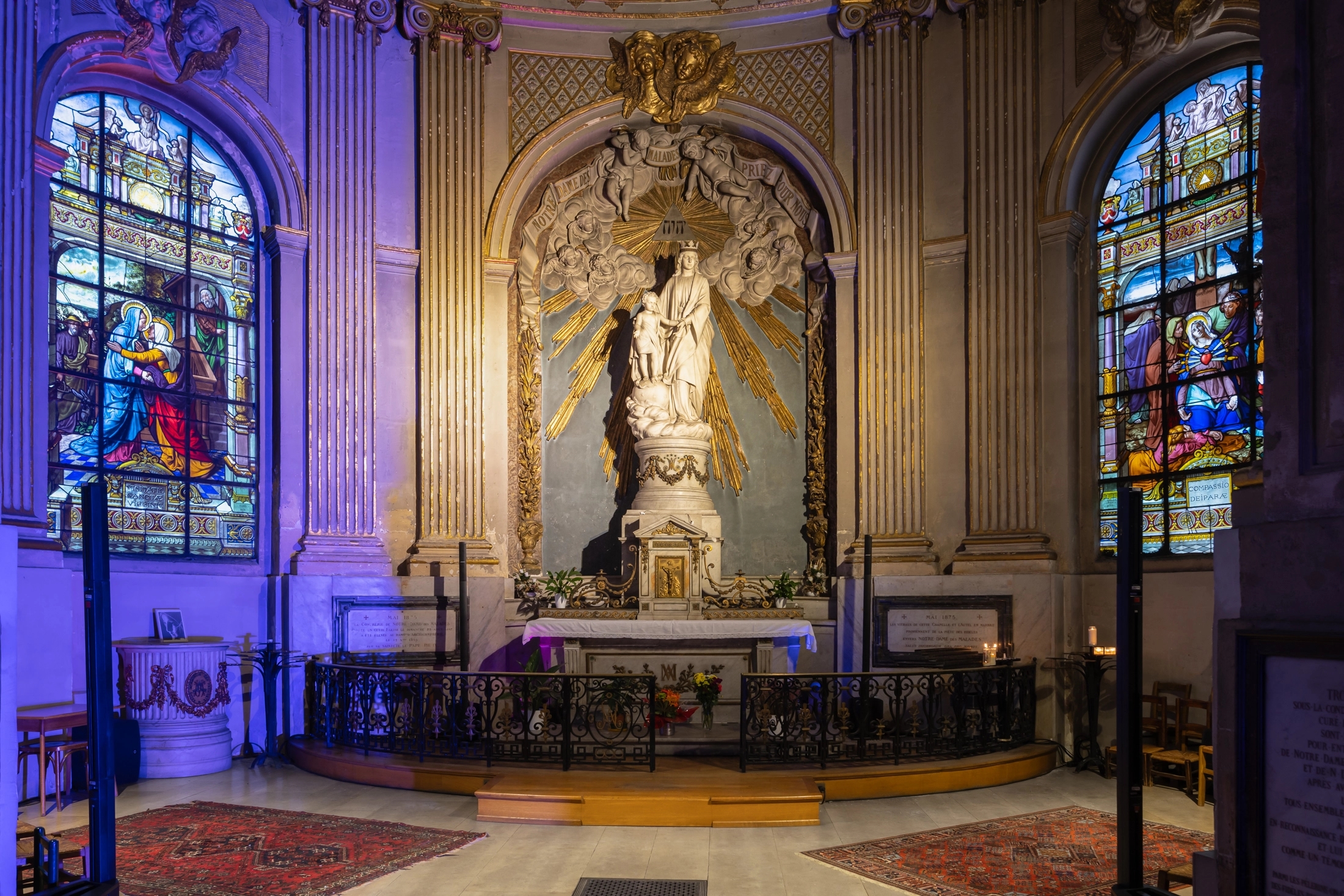
For Nuit Blanche 2026, artist and researcher Marie-Luce Nadal transformed Saint-Laurent Church with Sous la peau du ciel, a large-scale immersive sound installation that turns Earth's atmosphere into a living sonic landscape. Thousands of wishes collected from people around the world interact with lightning strikes detected in real time, creating a constantly evolving sound map.
At the heart of the experience, HOLOPHONIX spatializes more than forty simultaneous sound sources across a network of 80 loudspeakers installed throughout the church. Every voice, every lightning strike and every movement in the soundscape is precisely positioned in space, transforming the building into a vast atmospheric landscape where the intimate meets the planetary.
Mapping the Atmosphere
For years, Marie-Luce Nadal has explored atmospheric phenomena - clouds, lightning and wind - as material to be captured, translated and made perceptible. Working at the intersection of art, science and speculative fiction, she creates installations that question our relationship with the living world and the invisible forces that surround us.
With Sous la peau du ciel, she extends this research in a new direction. For the first time, sound becomes the primary medium.
We are constantly shown maps of the Earth or of the sky, but never maps of the atmosphere. And yet, we are atmospheric beings. We live in the air. We are overwhelmed by visual information. But expressing what we truly desire happens through speech. And speech brings us back to sound, to that vibration that emerges from the very core of our being,
says Marie-Luce Nadal.
The installation begins with a participatory gesture. Since April, thousands of people have been invited to leave a spoken wish via telephone. These anonymous voices—from children and adults, French-speaking or not—form a global collection of deeply personal aspirations.
On the night of Nuit Blanche, these voices are distributed throughout the church according to the geographic location of lightning strikes detected in real time by the collaborative Blitzortung network. Each lightning strike triggers a wish. Every location on Earth becomes a corresponding position within the church's nave.
What creates the atmosphere, what creates lightning, are burning desires, energies and tensions that come from every living being and are simply waiting to be fulfilled,
she continues.
The installation unfolds through two simultaneous sonic layers. A soundscape composed by Arthur Doué, built entirely from human voices and breath, moves through five atmospheric states, from outer space to the rhythm of a heartbeat. Floating above this evolving landscape, the wishes are spatialized according to the real-time geography of lightning activity.
It's about bringing the collective back to each person's intimacy. Bringing each of us back to the power of our own energy,
Marie-Luce Nadal adds.
Translating an Atmospheric Map into Space
Transforming this atmospheric cartography into a spatial listening experience was made possible by HOLOPHONIX. The system was designed by architect and co-producer Adrien Revel through his studio AKER.
The workflow begins with a detailed 3D model of Saint-Laurent Church created in Rhino, where both the loudspeakers and DMX lighting fixtures are positioned. From this model, a custom Grasshopper tool automatically exports the configuration to the two rendering platforms: HOLOPHONIX for immersive audio and BlinderKitten for lighting control. A single geometric model therefore drives both the sound and lighting spatialization.
Developing these custom export tools required a thorough understanding of the system. HOLOPHONIX's documentation is excellent, and the team was incredibly responsive. That made the whole process much easier,
explains Adrien Revel.
At the core of the installation is a Max/MSP patch developed by sound engineer Matteo Bonnasse, who was responsible for the spatialization. The patch manages both the wishes and the evolving soundscape. It receives live lightning data, triggering voices in real time and generating their movement according to their behaviour. Source positions are controlled directly from Max and transmitted via OSC to HOLOPHONIX, which continuously determines how each voice is rendered across the loudspeaker network.
More than forty sound sources evolve simultaneously throughout the church. Distributed across 80 loudspeakers, they create a dynamic sonic geography that reflects the electrical activity of Earth's atmosphere in real time.
The naturally reverberant acoustics of Saint-Laurent Church become an integral part of the artwork. No artificial reverberation is added—the sounds move through the building's real acoustic space.
Since this was the first time the work had ever been presented, everything had to be imagined and created from scratch. And because it's a purely sonic artwork, spatial composition became an integral part of the creative process,
notes Matteo Bonnasse.
A Workflow Designed to Scale
Beyond the spatialization itself, one of the project's greatest strengths lies in the continuity of its workflow across different playback systems.
What I really liked about HOLOPHONIX is that it works with any loudspeaker brand. It's completely hardware-agnostic. Many other solutions are proprietary, but HOLOPHONIX works with virtually any system,
says Adrien Revel.
From the outset, Sous la peau du ciel was conceived as a touring installation capable of adapting to a wide variety of venues, including railway stations, transit spaces, heritage buildings and contemporary art centres. Whether presented on an 80-loudspeaker deployment inside a church or on a smaller gallery system, the creative team retains the same workflow and the same spatialization logic.
We stay within the same playback environment. It's fantastic because we can move from the hardware processor to the Native version without changing the way we work,
he adds.
For Matteo Bonnasse, that continuity also made the system particularly easy to integrate.
The OSC communication between Max and HOLOPHONIX was straightforward.
A Work Designed to Evolve
Presented for the first time during Nuit Blanche 2026, Under the Skin of the Sky marks the beginning of a project designed to grow over time. While this first iteration combines pre-recorded wishes with live lightning data, future versions may invite audiences to contribute their wishes in real time.
I hope we'll continue working with HOLOPHONIX. This is a version that I hope to expand and develop even further,
concludes Marie-Luce Nadal.
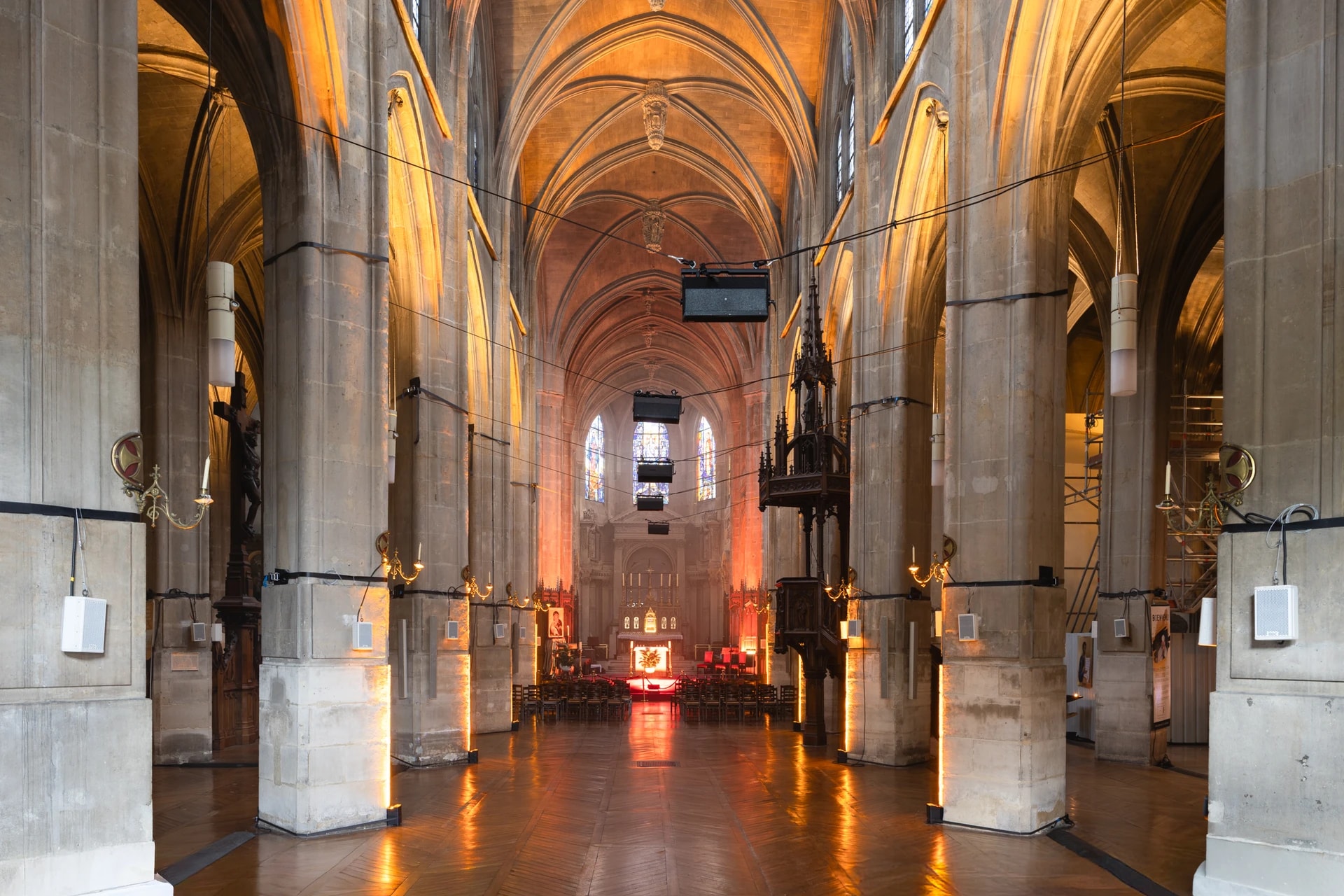
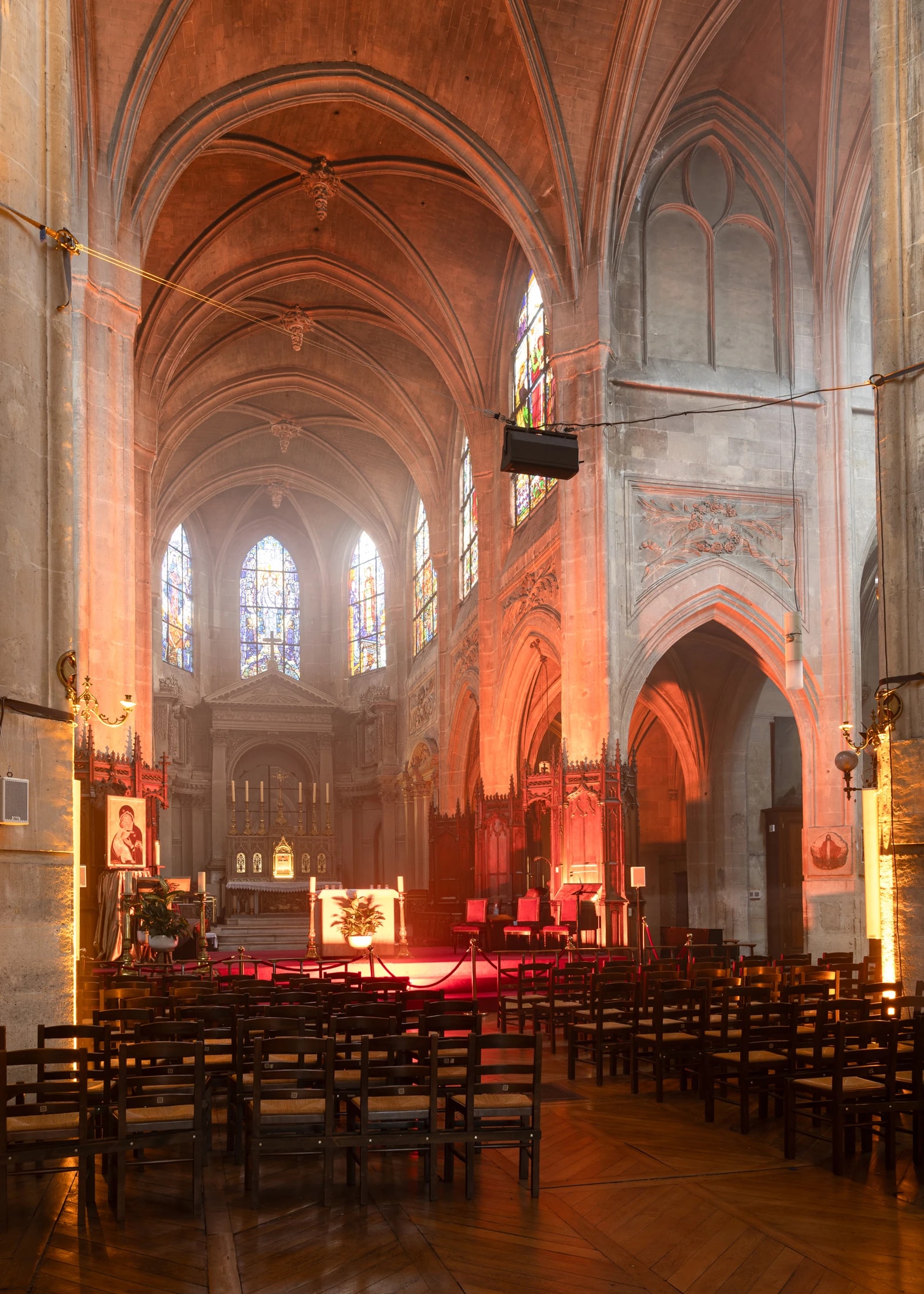
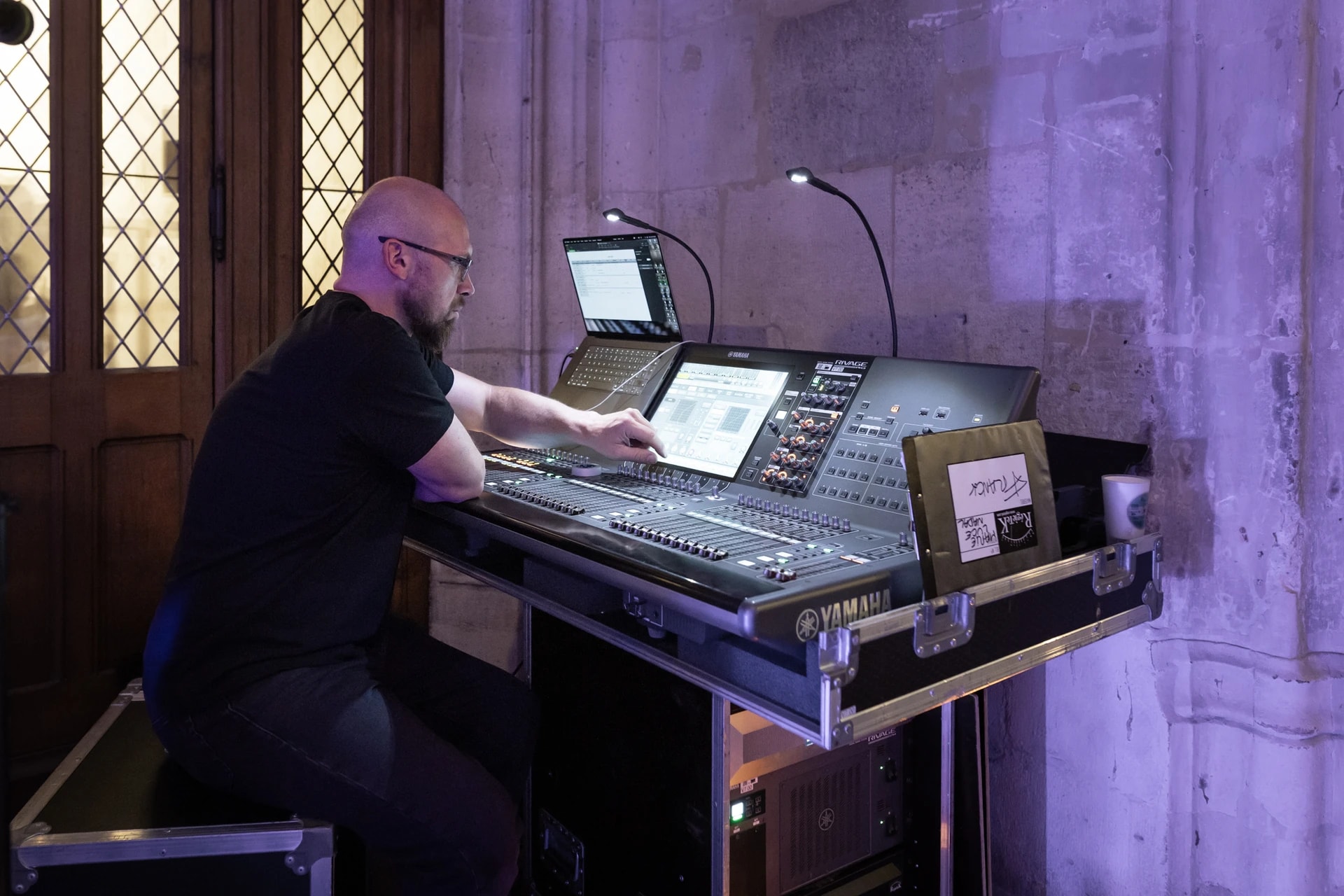
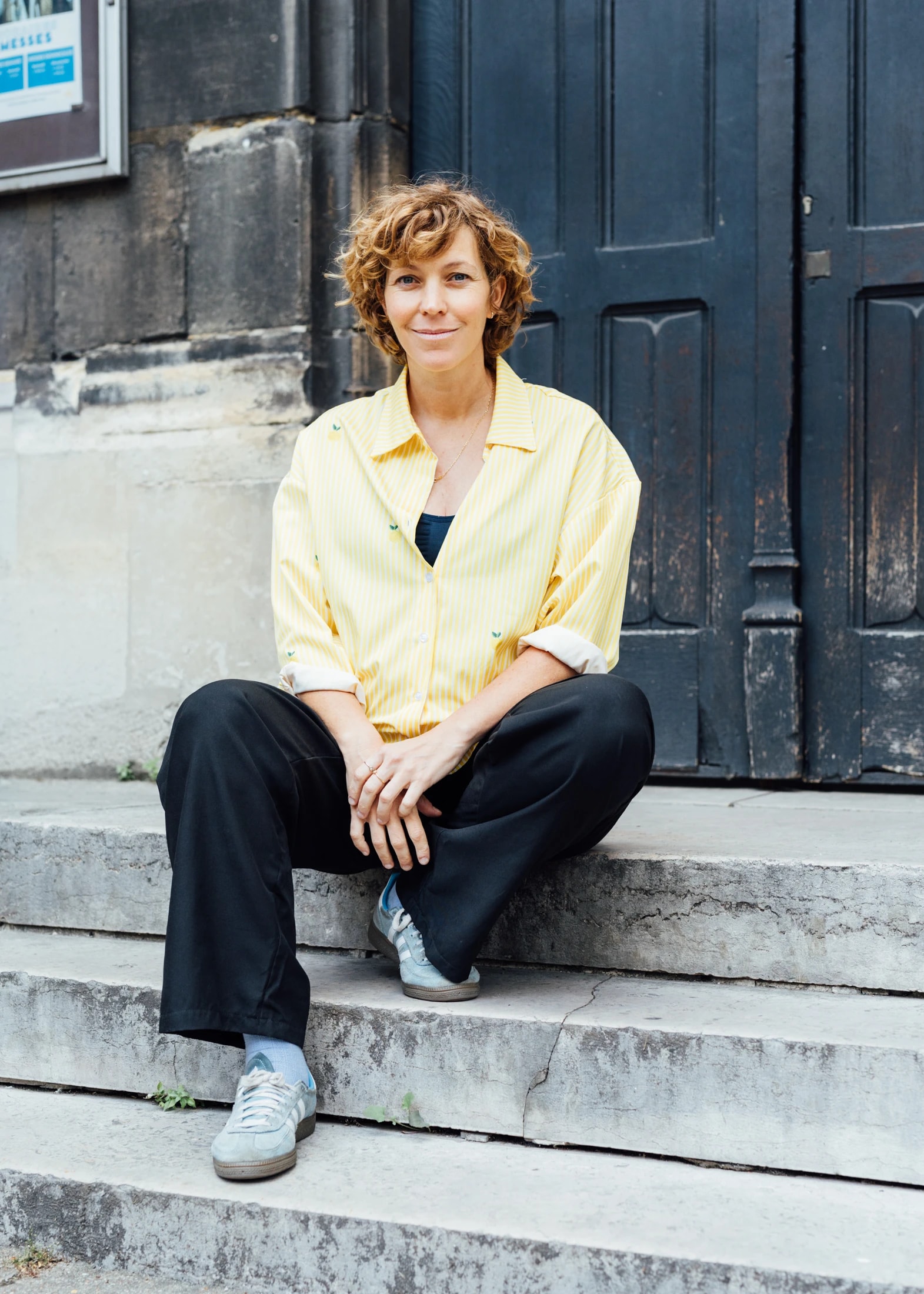
Photo credits — © Helen Karam